French Wedding Traditions & Etiquette: What International Couples Actually Need to Know
One of the great pleasures of planning a destination wedding in France is the conversation about what to keep, what to borrow, and what to leave entirely behind. French wedding culture is rich, specific, and in some ways entirely unlike what couples from the US, UK, Canada or Australia will have experienced at weddings at home.
You do not need to adopt any of it. But understanding it will help you make intentional choices — and avoid a few situations that catch international couples by surprise.
The “Vin d'Honneur”: France's Version of Cocktail Hour
The “vin d'honneur” is the French tradition of a drinks reception following the ceremony, typically held outdoors and lasting one hour and half to two hours. It is the equivalent of what English-speaking couples call a cocktail hour, but with a distinctly French character — local rosé, light canapés, champagne, and the easy, unhurried sociability that the French do better than almost anyone.
For destination couples, this is one of the French traditions I most enthusiastically encourage embracing. In the South of France, a “vin d'honneur” on a château terrace in the late afternoon light, with a view of the valley and a glass of something cold and excellent, is one of the finest hours of any celebration.
La “Pièce Montée” vs. The Wedding Cake
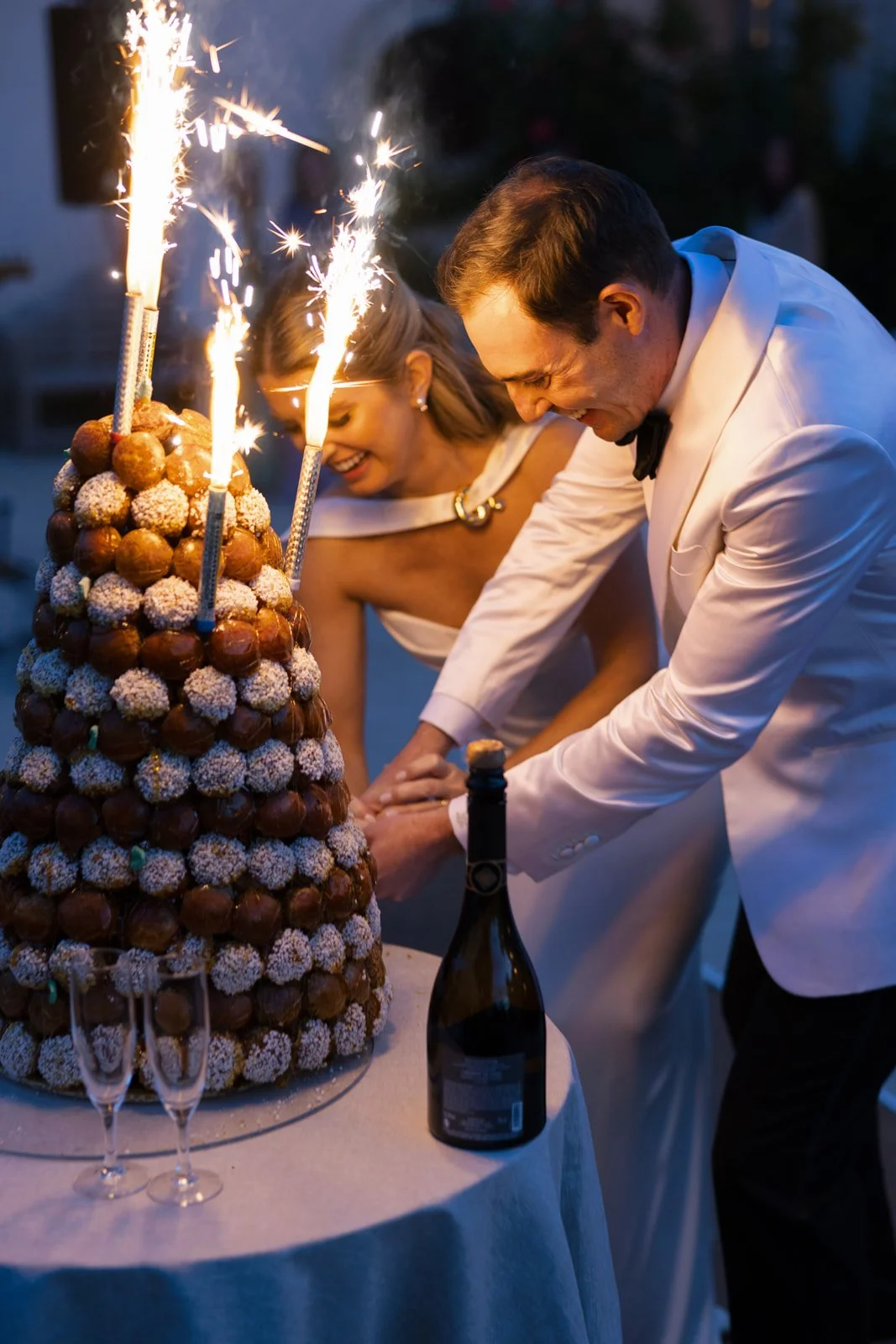
Sébastien Boudot photo - Couple from the USA cutting their “croquembouche” on the dancfloor before their first dance
Traditional French wedding culture centres on the “croquembouche” — a towering construction of choux pastry balls filled with cream and bound with caramel, sometimes draped in spun sugar. It is spectacular to look at, moderately spectacular to eat, and deeply French.
Most of my international couples opt instead for a wedding cake — either a tiered celebration cake in the Anglo-American tradition or, increasingly, a more architectural creation designed by one of the exceptional pastry artisans I work with in the region. Some couples do both: a small croquembouche for visual drama and a cake for serving. Whatever you choose, the dessert table in a South of France wedding is always a moment.
The Role of the Mayor — and What It Actually Means
In France, the only legally recognised marriage ceremony is a civil one conducted by the mayor (or a deputy mayor) at the town hall. Religious ceremonies and symbolic ceremonies have no legal standing. For international couples, this distinction clarifies the path immediately: you legalise your marriage through your own country's legal system, and your French celebration — however elaborate and ceremonially rich — is a symbolic union recognised by the people who matter to you, if not by the French state.
This is not a compromise. It is, for most of my couples, a relief — it removes an enormous layer of French administrative complexity and allows you to design your ceremony entirely as you wish, without constraint.
Ceremony Timing: Later Than You Think
French weddings start late and end late. A ceremony at 4 or 5pm is entirely normal. A dinner beginning at 9pm is standard. Dancing until 4am is expected. For guests accustomed to American wedding timelines, this can require a gentle orientation.
A late-starting, slow-burning celebration is not disorganised — it is the French way of taking pleasure seriously. Most guests from abroad discover they love it.
The Guest Experience: Formality and Warmth Together
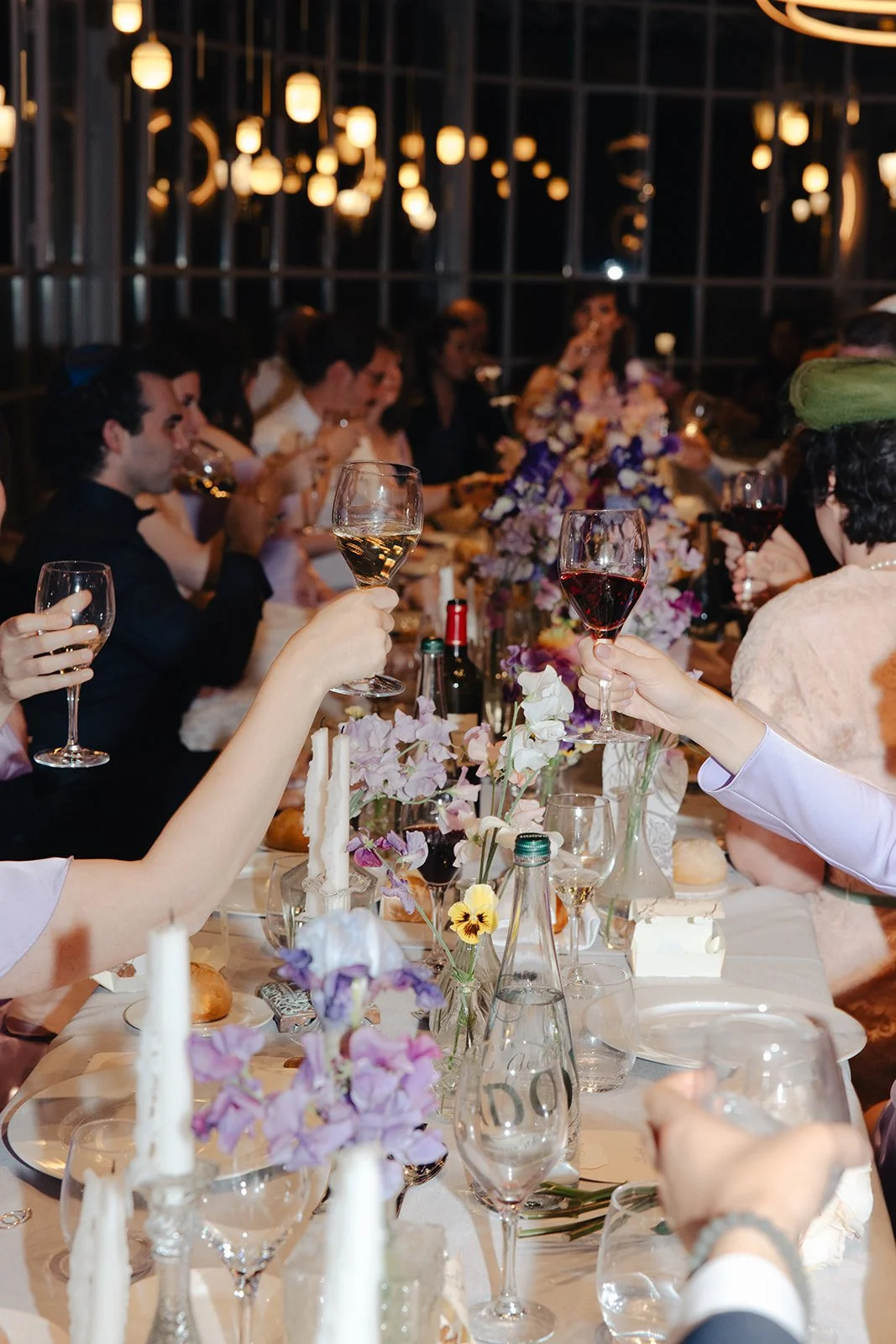
Alchemia photo - Guests cheering wine at wedding dinnere
French celebration culture manages to be simultaneously formal and deeply warm — a combination that takes a little getting used to but that most international guests find enormously appealing. Seating arrangements are taken seriously. Table presentation matters. The sequence of courses is thoughtful and unhurried. And yet the atmosphere is never stiff: there is laughter, there are long conversations across the table, there is genuine generosity.
For couples planning from the US or Australia, where wedding receptions often have a looser, more festival-like energy, the French approach can feel like an upgrade. Everything is considered. Nothing is rushed.
What to Keep From Your Own Tradition
My strong belief — developed over ten years of planning weddings for couples from across the English-speaking world — is that the best celebrations borrow selectively from both cultures. Keep the speeches if they matter to you: they are not a French tradition, but they translate beautifully. Keep the first dance. Keep whatever rituals carry meaning for your families.
But let the South of France do what it does best: set a table that is worth sitting at for three hours, pour wine that deserves to be talked about, and create an atmosphere so beautiful and unhurried that your guests lose track of time entirely.
The couples I work with are not trying to have a French wedding. They are trying to have their wedding, in France. That distinction is everything — and it is where the most interesting, most personal celebrations begin.