Wedding Trends 2026–2027: What Luxury Couples Are Actually Choosing
There is a particular kind of couple arriving at weddings in the South of France right now. They are not chasing trends — they are actively resisting them. And paradoxically, in doing so, they are setting them.
After a decade of planning high-end weddings in Provence, I have watched the luxury segment evolve from maximalist spectacle toward something far more considered: celebrations that are deeply personal, beautifully restrained, and designed to feel like an extension of the couple's actual life rather than a performance of it.
Here is what I am seeing — and designing — in 2026 and 2027.
1. Slow Luxury: The Turn Toward Presence
The most consistent request I receive from couples right now is this: I want our guests to feel completely at ease. Not dazzled. Not overwhelmed. At ease.
Sébastien Boudot photography
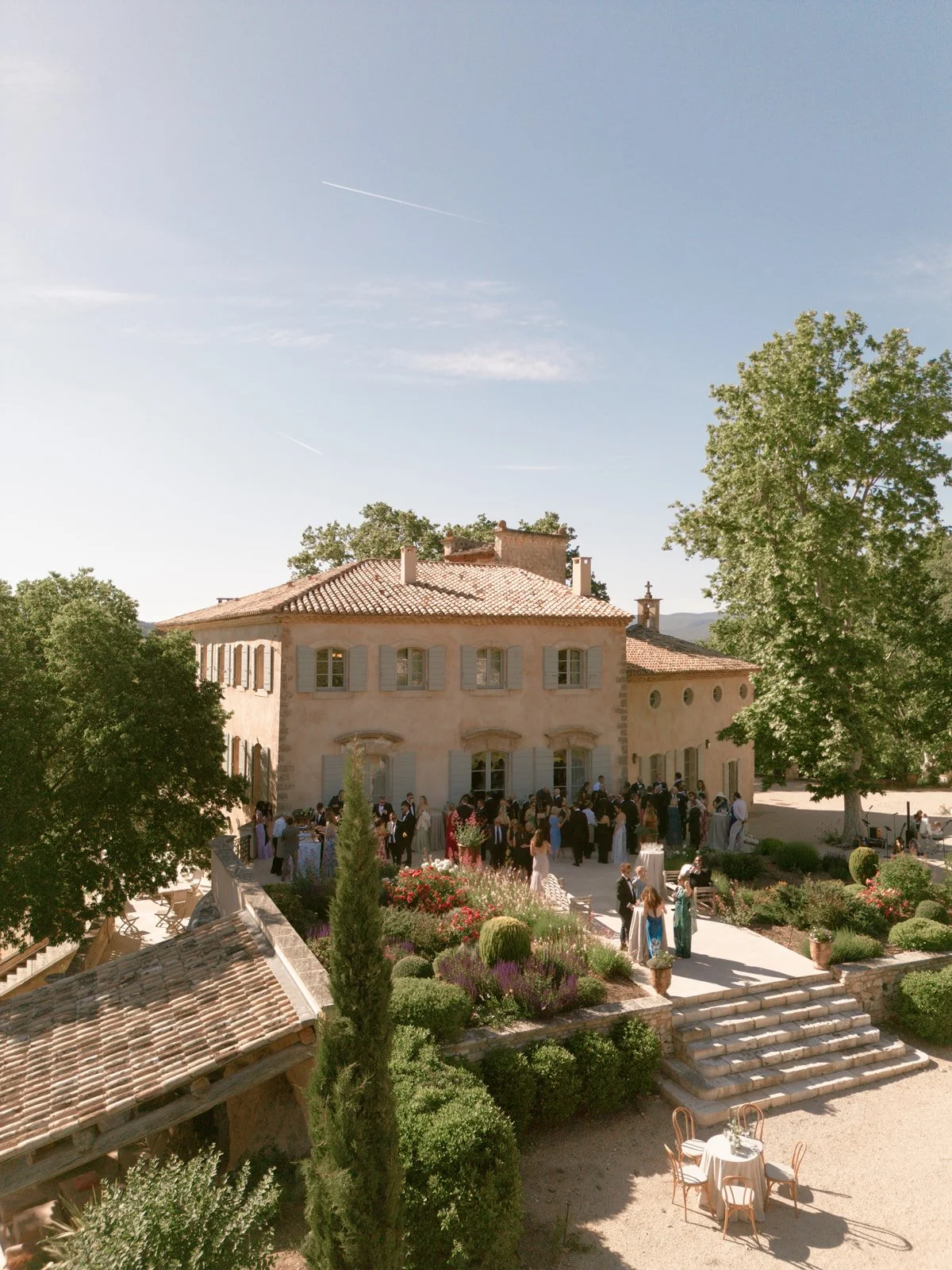
This translates into longer, unhurried timelines — ceremonies that do not rush, cocktail hours that stretch generously into golden hour, seated dinners that end not because the caterers need to clear up but because everyone has genuinely had their fill. It is a philosophy, it is slow luxury, and it is the most sophisticated choice a couple can make.
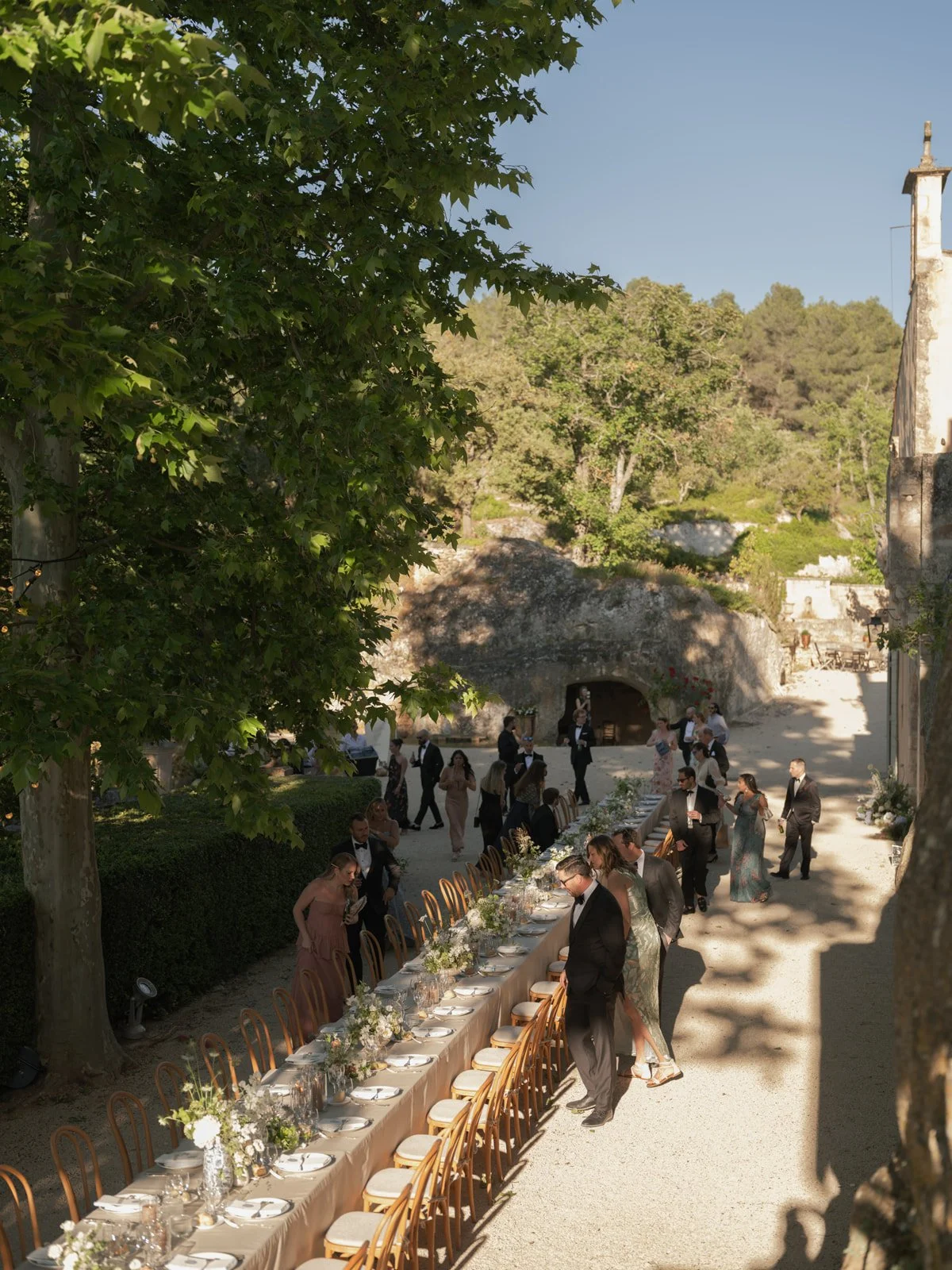
On the design side, it means edited rather than abundant florals. Long tables with breathing room. Fewer statement moments, more seamless atmosphere. The shift from 'more' to 'exactly right.'
2. Architectural Florals and Living Installations
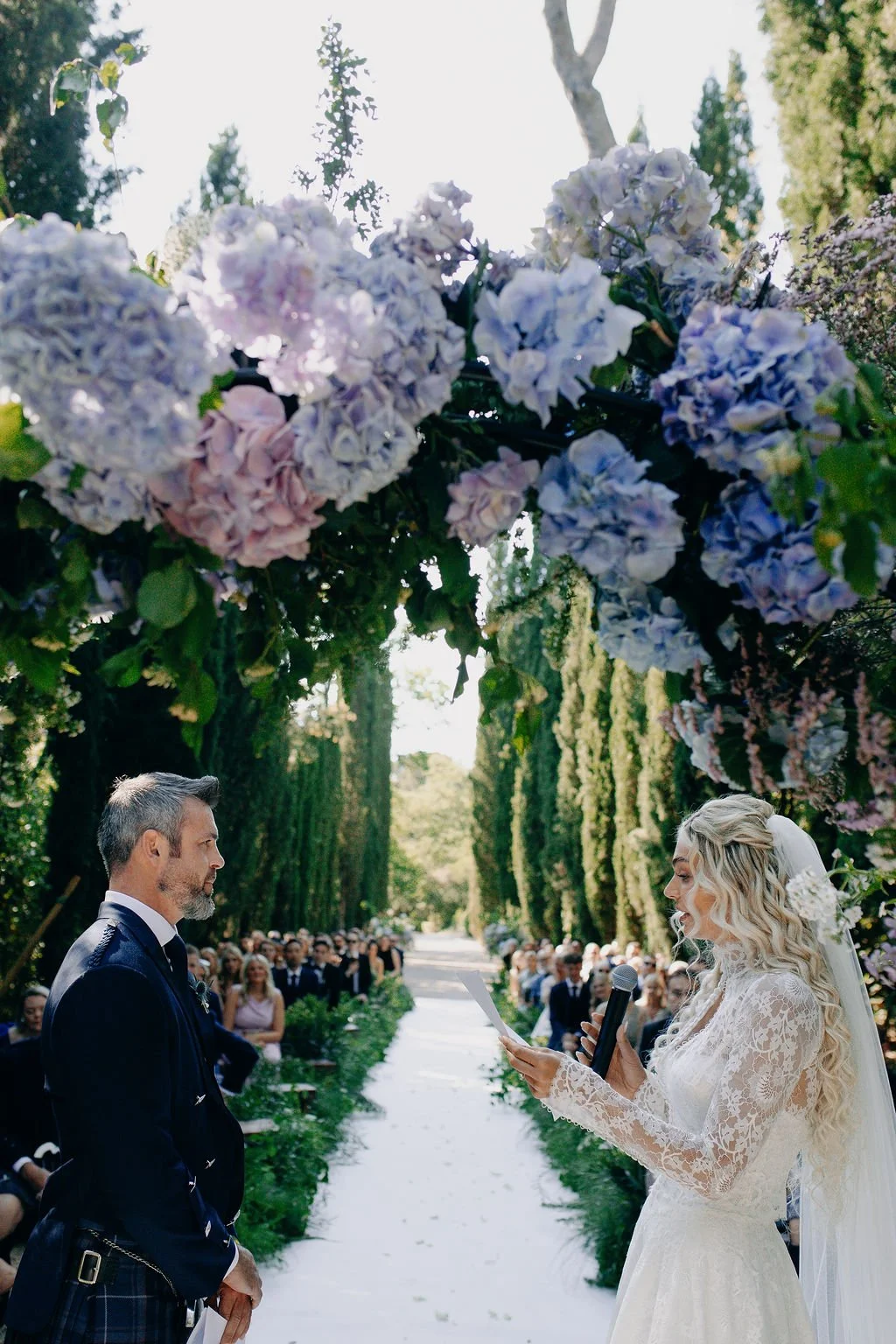
Floral design has moved from decoration into architecture. The most beautiful wedding installations I am seeing in 2026 use botanicals structurally — massive suspended arrangements that frame a landscape rather than ornament it, low-lying meadow tablescapes that feel foraged rather than arranged, and single-variety compositions that have the confidence to be simple.
Locally sourced, seasonally driven florals are not just an aesthetic preference anymore. They are an expectation. And in Provence — with its peonies, wisteria, wild lavender, and olive branches — the region makes this effortless.
Elise Morgan photography
3. The Intimate Guest List: Quality Over Quantity
The average guest count among my couples has shifted downward over the past three years. Where celebrations of 150 or 200 were common, I am now planning more frequently for 60 to 100 guests — intimate enough for genuine conversation at every table, scaled to venues that feel appropriately grand rather than merely large.
This is not a budget-driven decision. Most of these couples could host far more guests. It is a values-driven one. The people in that room matter deeply, and a smaller gathering allows that to actually be felt.
4. Multi-Day Programming as the Main Event
The wedding day itself is no longer the singular focus. Welcome dinners, day-after brunches, and even midweek adventure excursions for guests who stay longer in the region — these extended programming elements are where some of the most beautiful and spontaneous moments now happen.
I design multi-day frameworks that feel cohesive but not over-choreographed. Day one might be casual and deeply Provençal — a long table under plane trees with rosé and charcuterie. Day two is the ceremony and dinner. Day three is a relaxed morning with excellent coffee and a view. Together, they create an experience that feels like a small, wonderful chapter of life.
5. Design Rooted in Place
The single most significant shift I have witnessed in high-end destination weddings is the rejection of the portable aesthetic — the couple who could have had this wedding anywhere. The couples arriving in Provence in 2026 want a celebration that could only have happened here.
That means using local stone and shade of greens in the tablescape. It means commissioning a Provençal calligrapher. It means choosing a menu that reads like a love letter to the region. The design is not imposed on the landscape — it emerges from it.
Sébastien Boudot photography
As a planner who has spent more than ten years building relationships with the artisans, growers, and producers of this region, this is the kind of brief I love most.
Trends in the luxury market are less about what is fashionable and more about what is meaningful. The couples I work with are not following a trend — they are creating the standard.